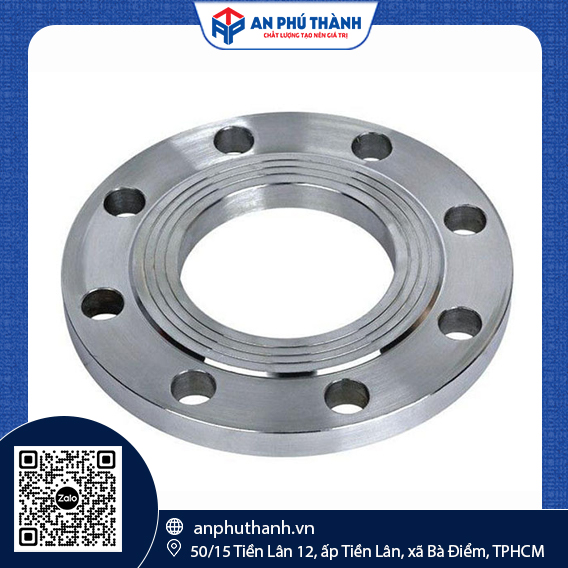
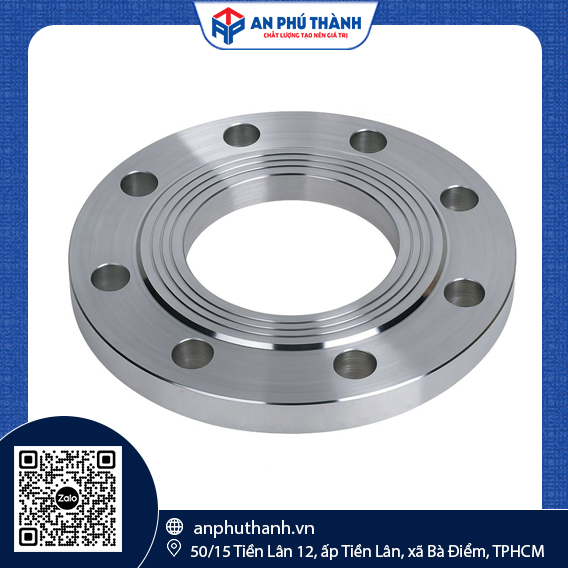


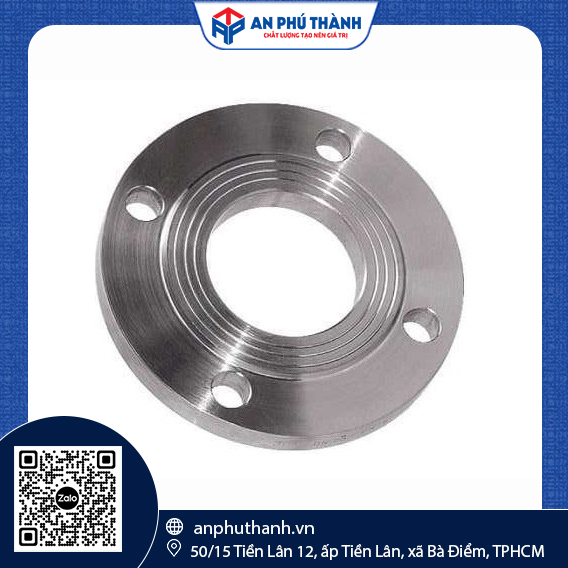
JIS 5K, 10K, 16K, 20K, 30K, 40K STEEL FLANGES
| Brand | Other Brands |
| Pressure Standard | JIS 10K, JIS 20K, JIS 30K, JIS 40K, JIS 5K |
| Material | SS304, SS316 |
| Size | DN15 - DN2000 |
| Design standard | JIS, BS4504, ANSI |
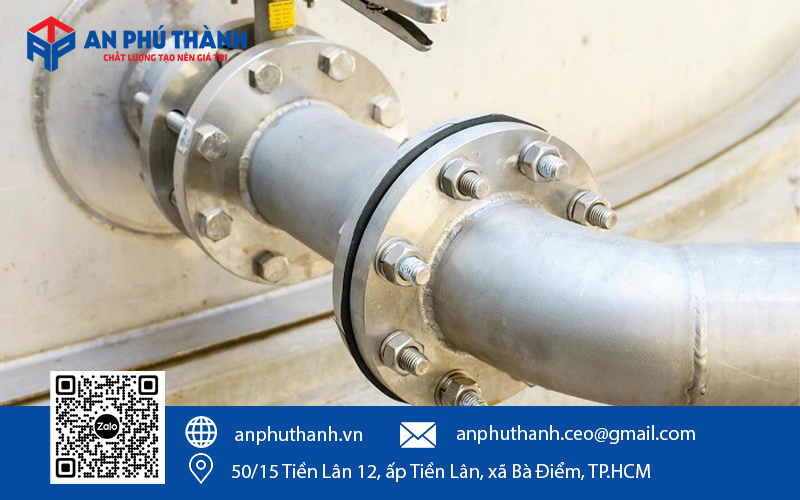
In systems carrying liquids, chemicals, or food, corrosion of joints not only causes leaks but can also contaminate the entire production line. The stainless steel flange emerged as a flexible, detachable connection solution that withstands high pressure and offers outstanding rust resistance compared with carbon steel flanges.
This product line is usually made of stainless steel 304 or 316, to the connection standards BS4504/EN 1092-1 and JIS B2220. Sizes range from DN10 to DN2000, meeting the diverse requirements of large and small piping systems.
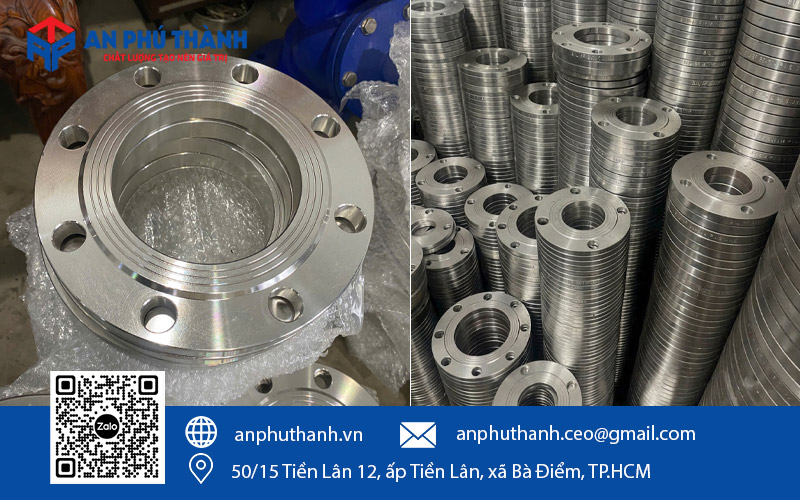
Like carbon steel flanges, stainless steel flanges form a bolted joint that connects valves or other equipment to the pipeline. The only difference is the material: stainless steel. Stainless steel has a thin chromium oxide layer that forms naturally on the surface and resists rust, so it needs no galvanizing or protective paint as carbon steel does.
The main advantages of stainless steel flanges are stable rust resistance and a clean, easy-to-clean surface that does not contaminate water or food with rust. They also keep their strength over a wide range of operating temperatures and require almost no coating maintenance over their service life.
However, stainless steel flanges cost more than carbon steel flanges of the same size. In environments rich in chlorides, such as seawater, brine, or some cleaning chemicals, pitting corrosion can still attack stainless steel, including grade 316. In addition, stainless steel joints require matching bolts; mixing in other materials forfeits the rust-resistance advantage.
Stainless steel flanges are commonly chosen for the piping systems of:
| Stainless grade | Main composition (approximate) | Characteristics | Suitable environment | Notes |
|---|---|---|---|---|
| 201 | Cr 16 to 18%, Ni 3.5 to 5.5%, high Mn | Low price, poor corrosion resistance, prone to staining and rust in high humidity | Dry locations, no pressure, light structures or decoration | Generally not used for pressure pipelines or damp media |
| 304 / 304L | Cr 18 to 20%, Ni 8 to 10.5% | Good rust resistance in clean water, gas, and food environments; the L version has low carbon content, suitable for welding | Clean water, food, beverages, HVAC, mild chemicals | Prone to pitting when exposed to media with a high chloride content |
| 316 / 316L | Cr 16 to 18%, Ni 10 to 14%, Mo 2 to 3% | Molybdenum gives better chloride and acid resistance than 304; the L version has low carbon content, suitable for welding | Coastal areas, seafood, chemicals, pharmaceuticals, mild brine | Higher price than 304 |
When should you choose 304 stainless steel flanges? When should you choose 316?
For the same pipe size, flanges under different standards have different outside diameters, bolt circles, and numbers of holes, so you must choose the standard of the valves and pumps they will be fitted to.
| Standard | Pressure designation | Common ratings | Notes |
|---|---|---|---|
| BS4504 / EN 1092-1 | PN (bar) | PN6, PN10, PN16, PN25, PN40 | EN material grades are usually written 1.4301 (304), 1.4307 (304L), 1.4401 (316), 1.4404 (316L) |
| DIN 2501 | PN (bar) | PN6, PN10, PN16, PN25, PN40 | The old designation, still widely used on the market and now replaced by EN 1092-1; at the common PN ratings the connection dimensions are equivalent to BS4504 |
| JIS B2220 | K (kgf/cm²) | 5K, 10K, 16K, 20K, 30K, 40K | Grades written SUS304, SUS316; JIS 10K is common with Japanese, Korean, and Taiwanese equipment |
| ASME B16.5 (often called ANSI) | Class (lb) | Class 150, 300, 600 | Dimensions in inches; not interchangeable with PN and JIS |
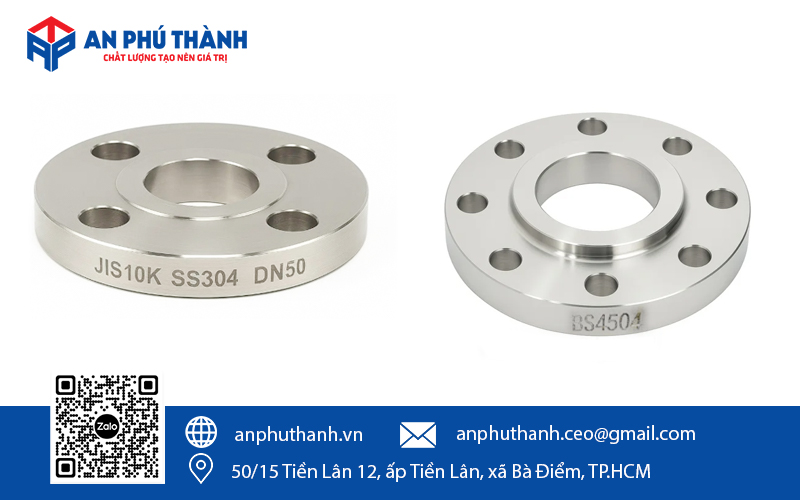
Besides grade and standard, the flange type determines how the joint is welded or attached to the pipe. The six most common types of stainless steel flange today:
| Type | Characteristics | When to use |
|---|---|---|
| Slip-on | Slides over the pipe and is welded on both sides; easy to fit, low price | Low to medium pressure, general piping |
| Weld neck | Has a tapered neck butt-welded to the pipe; transmits load well | High pressure and temperature, lines subject to vibration or fluctuation |
| Blind | A solid disc with no center bore | Closing off a pipe end, isolating a pipe section, inspection openings |
| Threaded | Screws onto the pipe thread; no welding needed | Small pipes, where welding is not permitted |
| Socket weld | The pipe is inserted into the flange socket and then welded | Small-diameter pipes, high pressure |
| Lap joint | A loose flange ring that rotates freely around the stub end | Lines where bolt holes must be easy to rotate into alignment, saving stainless steel |
With the lap joint flange, the flange ring can be carbon steel, while the stub end in contact with the medium is stainless steel. This approach helps reduce installation costs for large pipelines.
A stainless steel flange delivers its rust resistance only when the entire joint is selected as a matching set. Please note the following 5 points before making a purchase decision:
For stainless steel flanges, the material documentation is as important as the dimensions. A reliable supplier needs to provide complete CO and CQ documents, and also supply the matching bolts and gaskets for the type of flange supplied. At An Phu Thanh, we are confident in meeting all of these requirements, ensuring peace of mind for customers when they buy.
If you need a quotation for stainless steel flanges, or want to check a flange against the valves and pumps you are using, please contact Hotline 0946 729 913 or message An Phu Thanh’s Zalo OA. The An Phu Thanh team is always happy to support you.
Do you need product advice or a quote? Leave your details, and the technical team at An Phu Thanh will contact you within 24 hours.