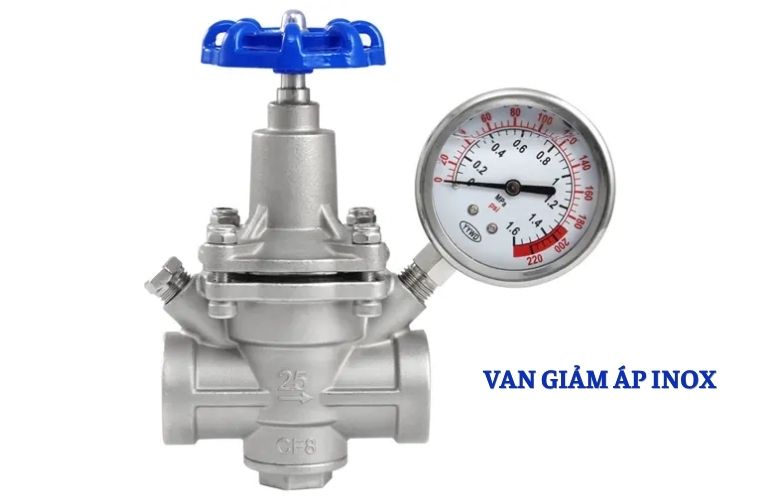

Normally Open Solenoid Valve: Construction & Operating Principle
The normally open solenoid valve is a device widely used in various pipeline systems to transport and control liquid, gas, steam, and other fluids. So, what is the structure and operating principle of this device? How can you purchase genuine products at the best prices on the market? Let’s find out in the article below.
What Is a Normally Open Solenoid Valve?
A solenoid valve is an industrial valve mainly installed in fluid pipeline systems. It is designed to open and close quickly, efficiently, and accurately to allow, prevent, or regulate the flow of fluid through the valve.
Unlike other types of valves that can be operated manually or automatically depending on the application, a solenoid valve can only be operated through electrical control using an Electric Actuator, which converts electrical energy into mechanical energy to operate the valve.
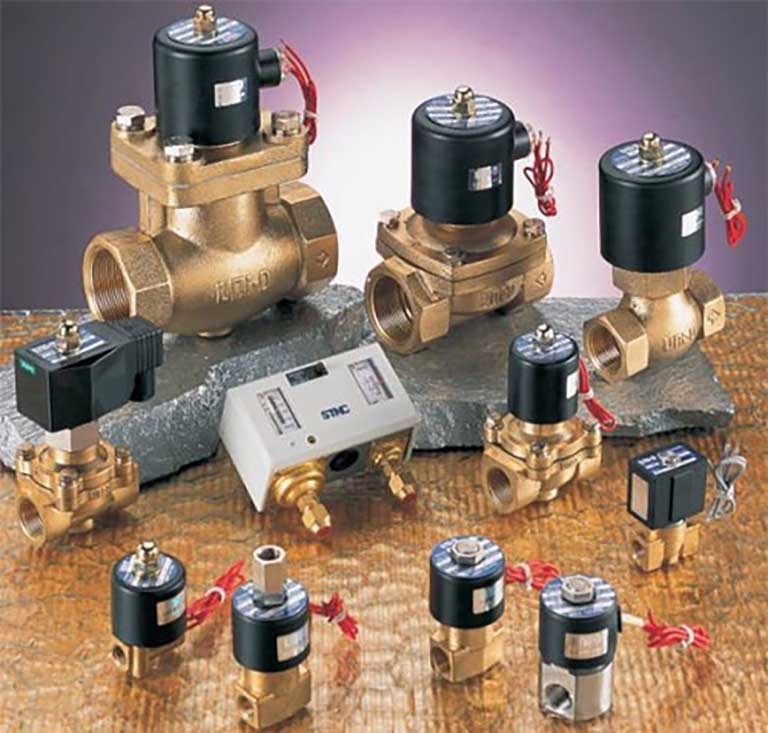
Therefore, they are suitable for installation in highly automated systems that require high precision. They can control multiple devices simultaneously without taking much time or affecting the system’s productivity, and can be installed in various locations, including areas that operators cannot reach.
There are many types of solenoid valves. However, based on their operating method, they are mainly divided into two types: normally closed (NC) solenoid valves and normally open (NO) solenoid valves.
A normally open solenoid valve is also an electrically controlled valve used to transport and regulate fluids. However, unlike a normally closed valve, which operates when power is supplied, a normally open valve remains continuously open when there is no electrical current, allowing fluid to pass through.
Conversely, when electrical power is supplied, the valve closes completely and prevents fluid from passing through. Due to this special operating principle, normally open solenoid valves are less common than normally closed valves and are more suitable for systems that need to operate continuously and frequently.
This type of valve is manufactured from various durable materials such as stainless steel, cast iron, brass, and steel. It can withstand pressures of up to 300 bar, while the fluid temperature can reach up to 180°C. In addition, although it is electrically operated, its energy consumption is relatively low, helping reduce operating costs.
Today, normally open solenoid valves are commonly used in areas such as liquid food production systems, gas and steam plants, garment factories, textile and dyeing factories, and more.
Structure of a Normally Open Solenoid Valve
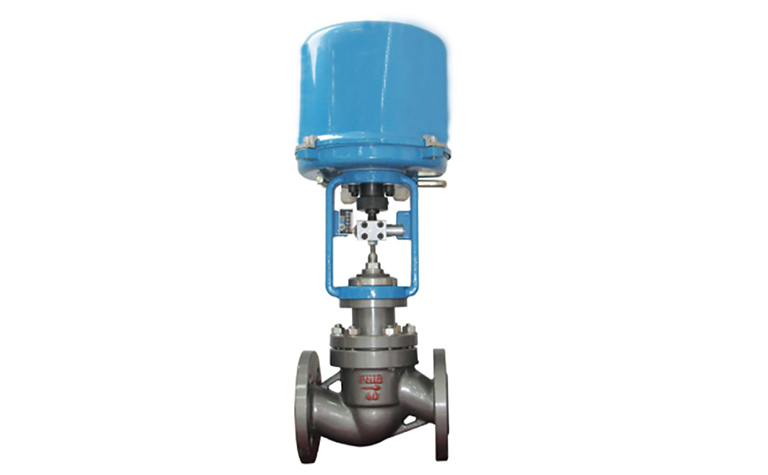
This type of valve is integrated with an electric actuator, which converts electrical energy into mechanical energy. A normally open solenoid valve consists of the following main components:
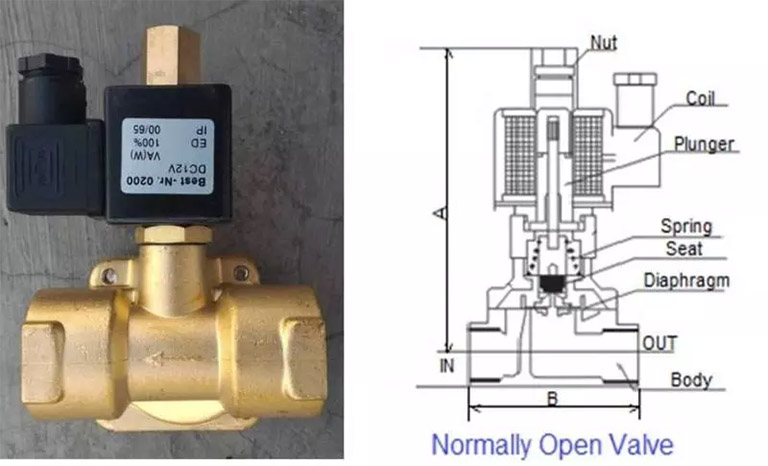
Valve Body:
- The external component that houses the other internal components.
- Usually manufactured from highly durable materials such as stainless steel, cast iron, brass, and plastic.
- Can withstand high pressure and high temperatures.
- The exterior is coated with an electrostatic coating to prevent electrical and magnetic interference, water penetration, and oxidation, helping protect the equipment, extend its service life, and ensure user safety.
- The valve body is designed with internal threads or flanges according to standards such as JIS, DIN, ANSI, and BS to ensure a secure connection to the pipeline and prevent fluid leakage. Gaskets can also be placed between the flanges to prevent gaps at the joints and reduce noise during operation.
Electrical Coil:
- Located inside the electric actuator, above the valve body.
- Usually manufactured from solid copper.
- Cylindrical in shape with electrical wire wound around it.
- Receives electrical power and converts it into a magnetic field to operate the device.
- Available in various voltages such as 12V, 24V, 110V, 220V, and 380V.
Valve Disc:
- Manufactured from various materials such as stainless steel and steel, providing effective corrosion resistance.
- Opens and closes to prevent, allow, or regulate the flow of fluid through the valve.
Valve Diaphragm:
- Usually manufactured from elastic materials such as EPDM rubber, NBR, and PTFE.
- Separates the fluid flow from the electric actuator.
- Highly durable and capable of withstanding high pressure and high temperatures.
Valve Stem:
- Located inside the valve body.
- Connects the spring and valve disc to open and close the valve.
- Since it receives and transmits force, it is manufactured from hard and durable alloys such as stainless steel and steel.
Spring:
- Usually manufactured from stainless steel, providing good load-bearing capacity and high elasticity.
- Connected to the valve stem, keeping the valve in the open position so that fluid can pass through.
- Responds to magnetic force to close the valve disc.
Operating Principle of a Normally Open Solenoid Valve
Compared with other conventional valves, the normally open valve has a relatively special operating method. However, its operating principle is very simple.
As its name suggests, when there is no electrical power, the valve remains continuously open, allowing fluid to freely pass through the valve.
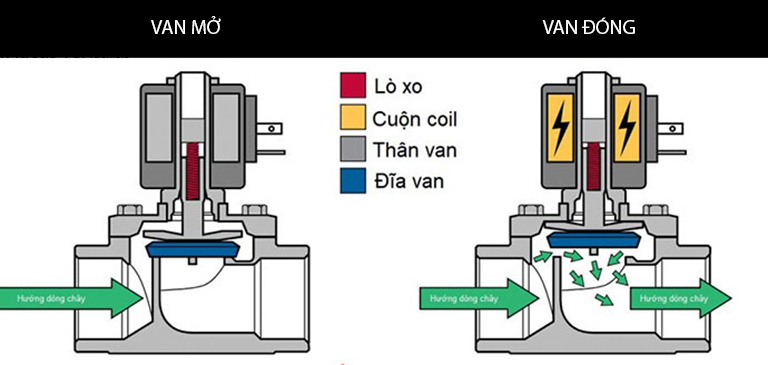
When the valve needs to be closed, the operator switches on the power supply. At this point, an electrical voltage is supplied to the electric actuator, acting on the coil and generating a magnetic field.
This magnetic field creates a force that acts on the spring. The compressed spring is released by its elastic force, pushing the valve stem and valve disc forward to completely block the valve opening and prevent fluid from passing through.
The valve remains closed until the power supply is disconnected. When the power is turned off, the spring is no longer affected and returns to its original position, pulling the valve disc and stem away from the closed position and creating an opening for fluid to pass through.
This type of valve is suitable for systems that require continuous fluid transportation with high productivity and output. It can help save more operating energy compared with normally closed valves.
An Phú Thành – Vietnam’s Leading Reputable Industrial Valve Importer & Distributor
Hotline: 0946 729 913 (24/7 Free Consultation & Quotation Support)

Technical Specifications of a Normally Open Solenoid Valve
- Size: DN8 – DN200
- Material: Brass, cast iron, stainless steel, plastic
- Operating method: Electrical control
- Operating voltage: 12V, 24V, 110V, 220V, 380V
- Connection method: Threaded connection, flange connection
- Connection standards: JIS, DIN, ANSI, BS
- Working pressure: Up to 100 bar
- Working temperature: Up to 180°C
- Media: Liquid, gas, steam
- Origin: South Korea, Japan, China, Taiwan, Malaysia, Europe…
- Warranty: 12 months
Classification of Normally Open Solenoid Valves
There are many types of normally open solenoid valves. To make it easier for users to choose, they can be classified according to the following criteria:
Classification by Material
Material is one of the important criteria for determining whether a device is suitable for a system, as each material has different properties and different resistance to temperature and pressure.
Choosing the right material also helps the system operate efficiently, achieve high productivity, and extend the valve’s service life.
Brass Normally Open Solenoid Valve
Brass is a material with excellent thermal conductivity. With an elegant design and attractive color, brass valves can enhance the aesthetics of a system.
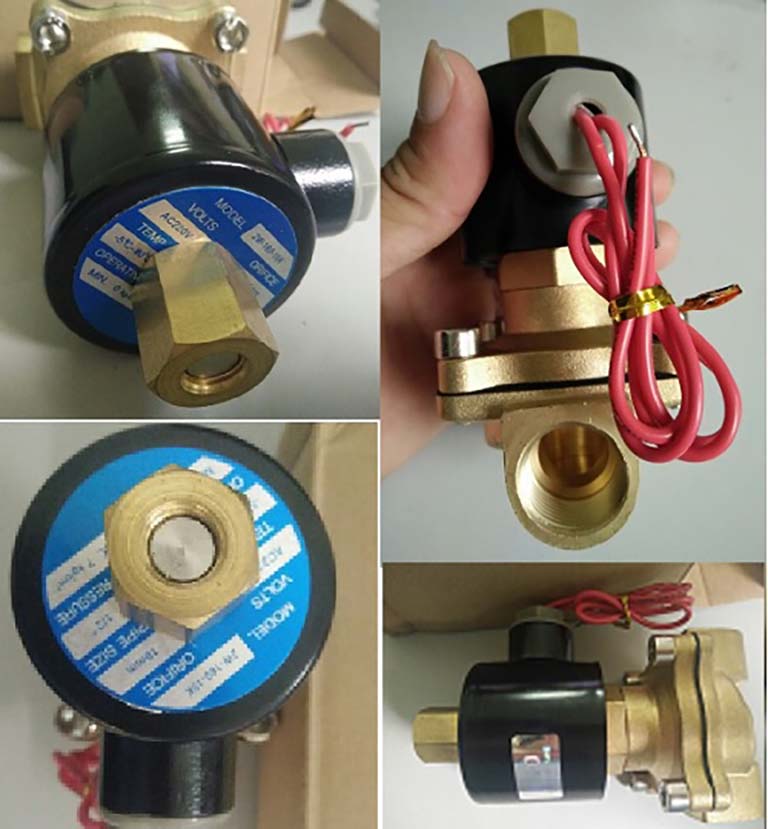
In addition, this type of valve can perform effectively under various environmental conditions. It offers good corrosion resistance and high durability, receiving positive feedback from many users.
However, brass valves generally have limited sizes, usually smaller than DN50. They are suitable for small-scale systems and are connected to pipelines using threaded connections, making them convenient to remove for inspection and maintenance.
Stainless Steel Normally Open Solenoid Valve
Usually manufactured from stainless steel such as 201, 304, and 316, these valves are available in various sizes and are suitable for many fluid media, including liquids, gases, and steam.
In particular, stainless steel is considered a high-quality material with outstanding properties such as high durability, good hardness, stable pressure and temperature resistance, and better corrosion and oxidation resistance than many other materials.
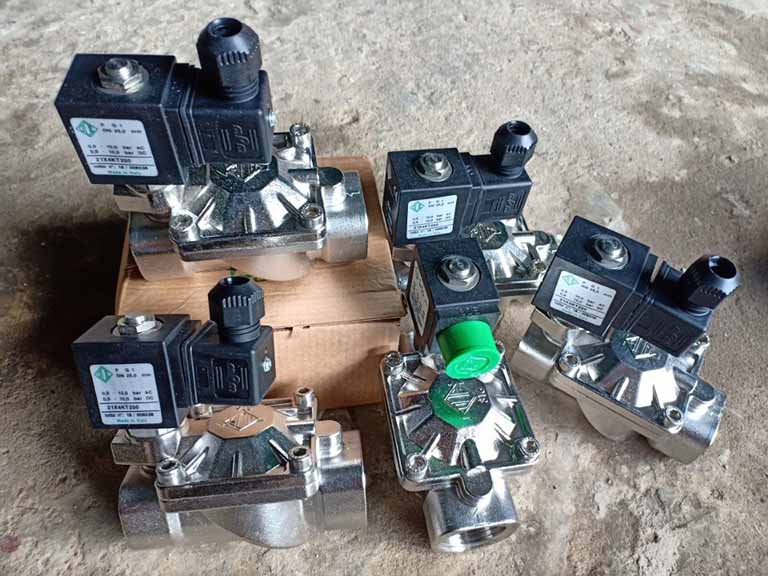
Stainless steel valves also receive positive feedback from users because of their elegant and attractive design. They maintain their polished appearance and do not easily rust over time.
Stainless steel is also relatively safe and does not contain harmful substances, making it suitable for use with clean fluids without affecting fluid quality.
Stainless steel valves are widely used in large-scale, highly automated systems and are suitable for hot steam, hot water, chemicals, gasoline, petroleum, wastewater, and other applications.
Due to the excellent advantages they offer, stainless steel valves are generally more expensive than valves made from other materials. However, the higher price is often associated with higher quality, making these devices highly favored by users.
Cast Iron Normally Open Solenoid Valve
Usually manufactured from materials such as ductile iron and gray cast iron, these valves are affordable, highly durable, and safe for users, making them popular for manufacturing industrial valves.
The valve stem is designed to be strong and can withstand high flow pressure inside the valve body. It also provides smooth operation with relatively low noise and good corrosion resistance.
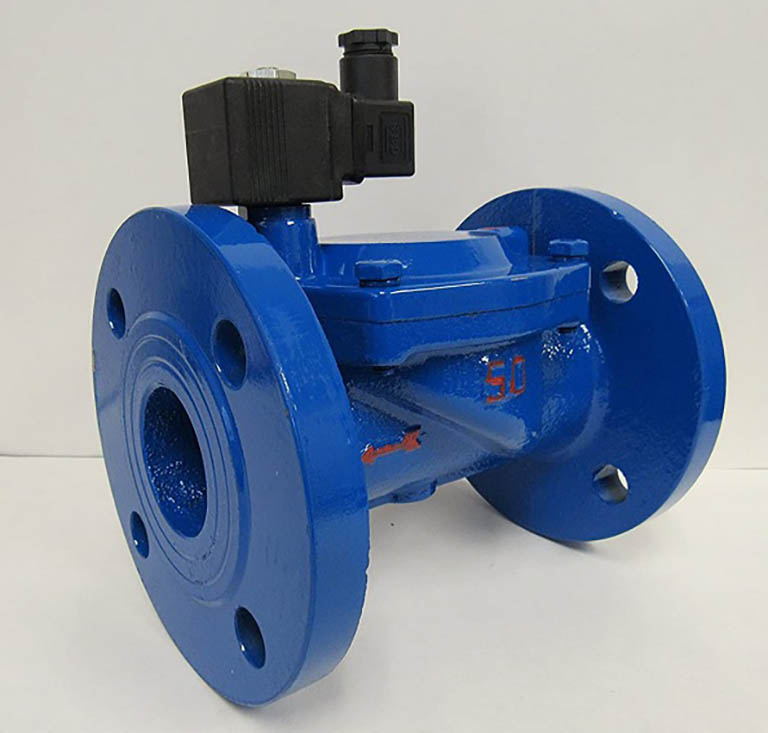
To protect the valve from oxidation caused by environmental factors, the outside of the valve body is coated with a high-quality epoxy layer, helping preserve its appearance while extending its service life.
The valve body has good hardness and impact resistance and does not easily crack or break during use.
Plastic Normally Open Solenoid Valve
The plastics commonly used include PVC, uPVC, and cPVC. They offer good flexibility, high wear resistance, low impurity content, and do not contain harmful substances, making them safe for users.
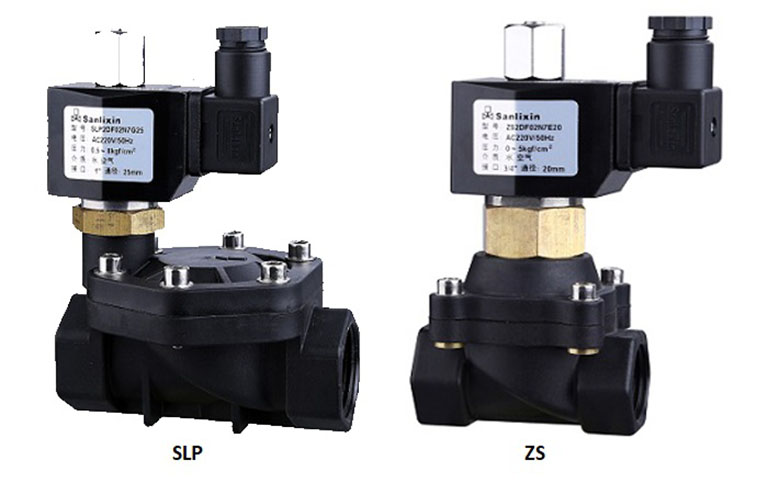
Plastic valves feature an elegant angular design, attractive colors, and a smooth, glossy valve body, providing high aesthetic value. They can be used under various environmental conditions and, in particular, offer excellent corrosion resistance, making them suitable for chemical, dyeing, printing, textile, food, beverage, and other systems.
They have a compact design and are easy to install in various locations, while their connection strength is relatively good. However, after a period of use, plastic valves may become dull. If installed in locations frequently exposed to dust, sunlight, rain, wind, and other environmental factors, the plastic may become brittle and prone to breakage.
Classification by Connection Method
With sizes ranging from DN8 – DN200, normally open solenoid valves are connected to system pipelines using two main connection methods: threaded connection and flange connection.
Threaded Normally Open Solenoid Valve
This is a very common connection method and is used for most pipelines smaller than DN50.
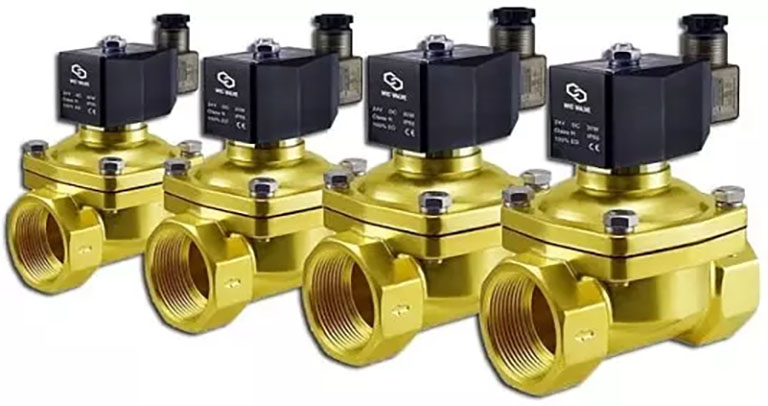
The valve body is designed with spiral internal threads. During installation, the operator simply screws the threaded ends into the pipeline in the correct direction and tightens them securely to complete the installation.
However, threaded connections are only suitable for small-scale systems with moderate pressure, so the appropriate connection method should be selected according to the actual application to ensure effective operation.
Flanged Normally Open Solenoid Valve
Flange connections are among the most commonly used connection methods today. They are applied in almost every field and are suitable for equipment and pipelines with sizes of DN50 or larger.
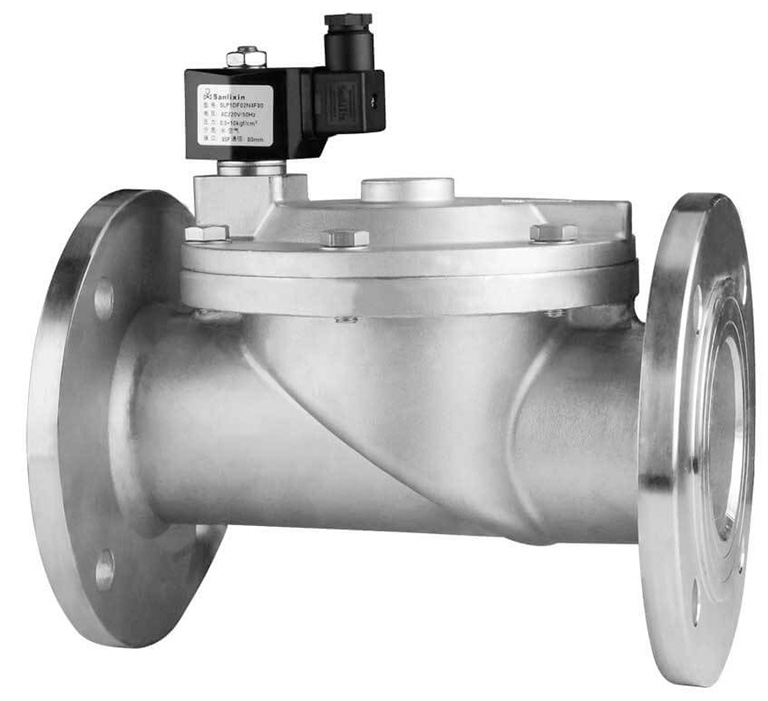
Flanges are usually cast from solid metal according to standards such as DIN, JIS, ANSI, and BS. On solenoid valves, they are designed directly on the valve body. Therefore, during installation, it is necessary to select flanges with matching standards for both the pipeline and the equipment to ensure successful installation.
In addition, to improve sealing and ensure smoother operation, elastic rubber gaskets can be added to prevent fluid leakage and reduce vibration during use.
Classification of Solenoid Valves by Voltage
As mentioned above, solenoid valves are operated exclusively through electromagnetic control, which converts electrical energy into mechanical energy to control the valve. The voltage used in each system may vary, so it is necessary to select the correct control voltage to ensure effective valve operation and avoid potential risks.
12V Normally Open Solenoid Valve
Because this voltage level has relatively limited applications, 12V valves are manufactured less frequently and are not as common as valves with other voltage levels.
However, this does not mean they are not used. 12V solenoid valves are often manufactured for specific production systems that require this particular voltage level.
24V Normally Open Solenoid Valve
24V is considered a relatively safe voltage level. It can be used in various fields and is suitable for operating different types of equipment without creating significant risks.
Today, 24V solenoid valves are widely used in automated production systems in industrial parks and manufacturing facilities, providing reliable opening and closing performance and high productivity.
110V Normally Open Solenoid Valve
This voltage level is not widely used in Vietnam and is incompatible with many of the equipment and electrical systems currently in operation. However, it offers a relatively high level of safety and is less likely to cause unwanted electrical incidents.
110V solenoid valves are generally used in small-scale, low-power systems such as laboratories and microbiology research facilities.
220V Normally Open Solenoid Valve
This is currently the most commonly used voltage level and is compatible with most equipment and electrical systems in Vietnam.
Therefore, it can be used in various fields, from industrial and agricultural production to everyday applications, providing high working efficiency.
However, appropriate electrical insulation and safety measures must be ensured during use, as this voltage can cause electric shocks, fires, and explosions.
Advantages and Disadvantages of Normally Open Solenoid Valves
Normally open solenoid valves are widely used in production systems, especially systems that need to operate continuously to transport fluids. These devices receive considerable recognition from users because of the advantages they offer.
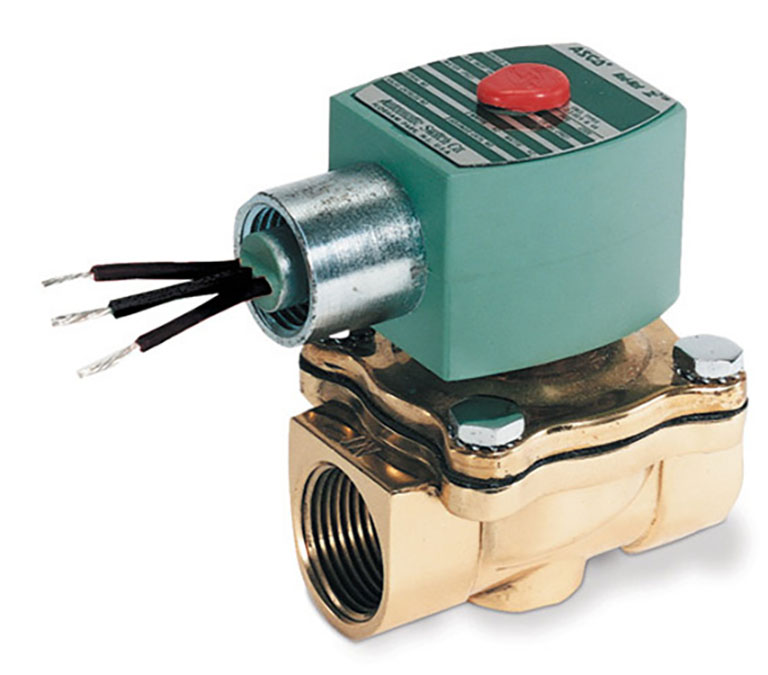
Advantages:
- Elegant, modern, and sturdy design suitable for installation in various locations.
- Fast and accurate opening and closing, providing high working efficiency.
- The valve continuously transports fluid while in the closed state, helping save energy costs.
- Available in various voltage levels from 12V – 220V to suit different system sizes.
- Usually manufactured from durable materials such as stainless steel, cast iron, steel, brass, and plastic, which can withstand high pressure and high temperatures and provide effective corrosion and oxidation resistance.
- Suitable for a wide range of fluid media, from common media such as clean water and wastewater to more specialized media such as gas, steam, gasoline, oil, and chemicals.
- Two main connection methods, threaded and flanged, help create a strong and durable system without fluid leakage into the external environment.
- Automatically operated by electrical voltage and capable of remotely controlling multiple devices simultaneously. It can also be installed in locations that operators cannot reach.
Disadvantages:
- Because it remains continuously open to allow fluid to pass through, it is less common than normally closed solenoid valves.
- The power supply used to close the valve cannot be maintained for too long, with a maximum duration of approximately 2 hours.
- Not suitable for highly viscous fluids such as slurry.
- As an electrically controlled device, it contains a coil that should not be exposed to excessive water, as this may cause an electrical short circuit.
- The flow rate of fluid passing through the valve may decrease.
Applications of Normally Closed Solenoid Valves
Normally closed solenoid valves have many excellent features and are therefore used in various fields. Typical applications include:
- Water supply and drainage systems.
- Fire prevention and firefighting systems.
- Factories producing and transporting fluids such as food, pharmaceuticals, cosmetics, and more.
- Agricultural irrigation systems.
- Chemical plants.
- Hot gas and compressed steam systems such as boilers, steam boilers, autoclaves, drying equipment, air pumps, and more.
- Underground pipeline systems.
- Thermal power plants.
- The exploration, transportation, and refining of petroleum, oil, gas, and other fuels.
- Textile and dyeing factories.
- Paper, pulp, and packaging production factories.
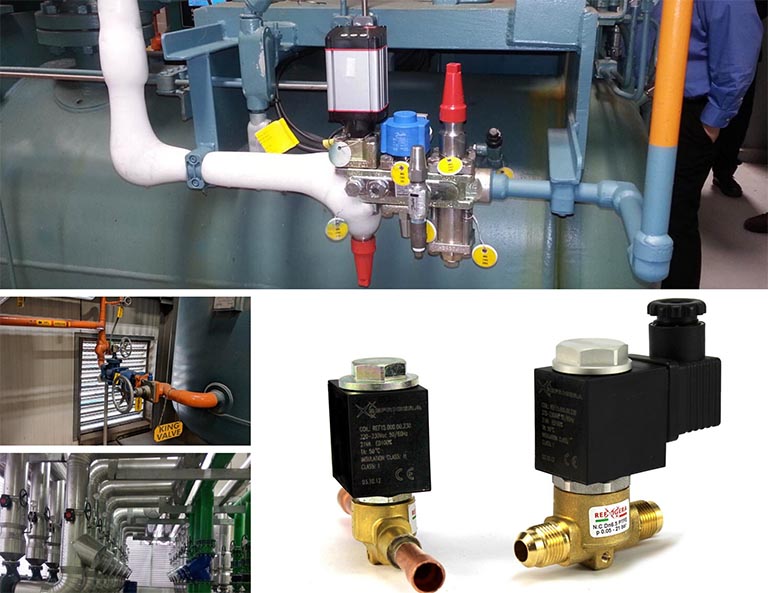
Things to Consider When Choosing a Suitable Normally Open Solenoid Valve
Choosing a device that is suitable for the system is essential for achieving high production efficiency. Below are some factors you should consider when selecting this type of equipment:
- Choose a valve suitable for the operating environment, such as liquid, compressed air, hot steam, corrosive substances, and other media.
- Choose a valve suitable for the pipeline size and connection method.
- Choose a valve compatible with the system’s rated voltage.
- Choose a valve that meets the system’s required technical specifications, such as pressure, temperature, and other parameters.
- Choose valves from reputable distributors to ensure genuine, high-quality equipment.
Where to Buy Genuine Normally Open Solenoid Valves at Competitive Prices?
Hopefully, the information above has answered some of your questions about normally open solenoid valves. If you are looking for a supplier that provides genuine, high-quality equipment at competitive market prices, An Phú Thành is certainly one of the suppliers you may consider.
With the goal of providing Vietnamese consumers with the highest-quality products, throughout 15 years of development, An Phú Thành has continuously researched and sourced products from reputable brands and supplied them to the market at competitive prices.
With its reputation for professional management and customer service, we have received high levels of recognition and trust from customers over the years. Currently, we are one of Vietnam’s leading equipment distributors, with hundreds of agents and suppliers providing materials for numerous large-scale projects and construction works across the country.
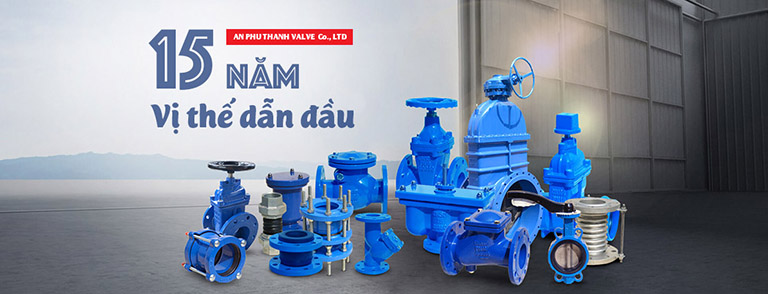
When you decide to purchase from An Phú Thành, it means that the products you receive will be fully guaranteed because:
- We are a reputable distributor authorized by many renowned brands from various countries to supply genuine products in the Vietnamese market, particularly brands from South Korea.
- We maintain large quantities of products in stock, with a wide range of designs, materials, and sizes to meet customers’ diverse needs.
- Fast nationwide delivery to your location, with multiple payment methods available for customers to choose from.
- Reasonable market prices accompanied by many attractive promotional policies.
- All products are directly imported from overseas without intermediaries and come with complete CO – CQ certificates.
- All equipment and accessories are covered by genuine manufacturer warranties for up to 12 months.
- A dedicated and enthusiastic team of staff is available to provide consultation 24/7.
If you have any questions or need a quotation for normally open solenoid valves, please contact An Phú Thành via the hotline for consultation.
An Phú Thành Trading Service Co., Ltd.
Address: 50/15 Tiền Lân 12, Tiền Lân 1 Hamlet, Bà Điểm Commune, Hóc Môn District, Ho Chi Minh City, Vietnam
Phone: 02862681578 or 0946729913
Email: ceo@anphuthanh.vn
Website: anphuthanh.vn
Fanpage: FB.com/anphuthanh2